
Ballast
Ballast blocks for ground-mount frames
Coming soon
The weight that holds a ground-mount frame in place, sold in the numbers the maker sets for your wind.
- Per block
- 18kg or more
- Gusts over 40mph
- 2 blocks
- Gusts over 80mph
- 10 blocks
We use cookies to improve your visit.
Essential cookies keep the website and your basket working, so they're always on. Analytics cookies (Google Analytics and Microsoft Clarity) show us which pages people find useful. They stay off unless you turn them on.
Coming soon. Nothing's on sale yet. Join the list on any product page and we'll email you when ordering opens.
Newcastle · coming soon
Portable power stations and standalone home batteries, listed with the numbers that matter: capacity, output and how they recharge. Nothing's on sale yet. Join the list and we'll email you when it is.
Size your batteryCompare power stations
Standalone storage only Our batteries and power stations charge from a wall socket, a car or their own folding panel. None of them connect to a plug-in solar kit, and a plug-in kit must never be used with a battery.
What the capacity runs
0.5kWh
About 425Wh reaches the sockets
1.0kWh
About 850Wh reaches the sockets
2.0kWh
About 1,700Wh reaches the sockets
Worked out with 85% of the stored energy reaching the sockets and typical figures: fridge-freezer 40W averaged over a day, router 10W, laptop 50W, 15Wh a phone charge. Your appliances' labels give their own.
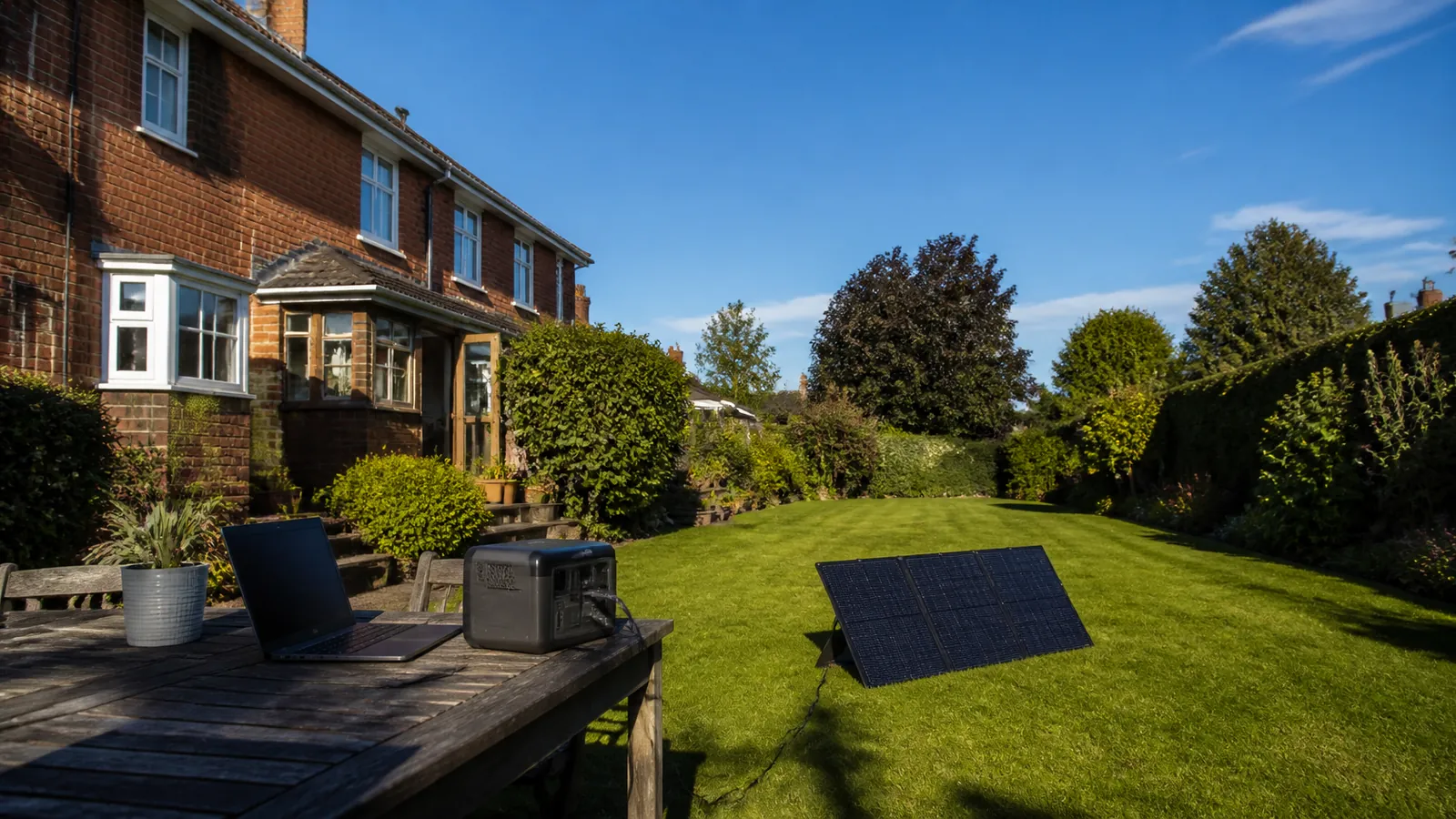
Matrix 01
Three size classes, worked out from capacity alone. Each model's full spec goes up when we list it.
Tap a heading to sort. Swipe the table sideways on a phone.
| Size class | |||||
|---|---|---|---|---|---|
| 500Wh class | 500 | 425 | 10 | 42 | 28 |
| 1kWh class | 1,000 | 850 | 21 | 85 | 56 |
| 2kWh class | 2,000 | 1,700 | 42 | 170 | 113 |
The 1kWh portable is the first size we plan to list. Running times are rounded down.
Off-grid charging
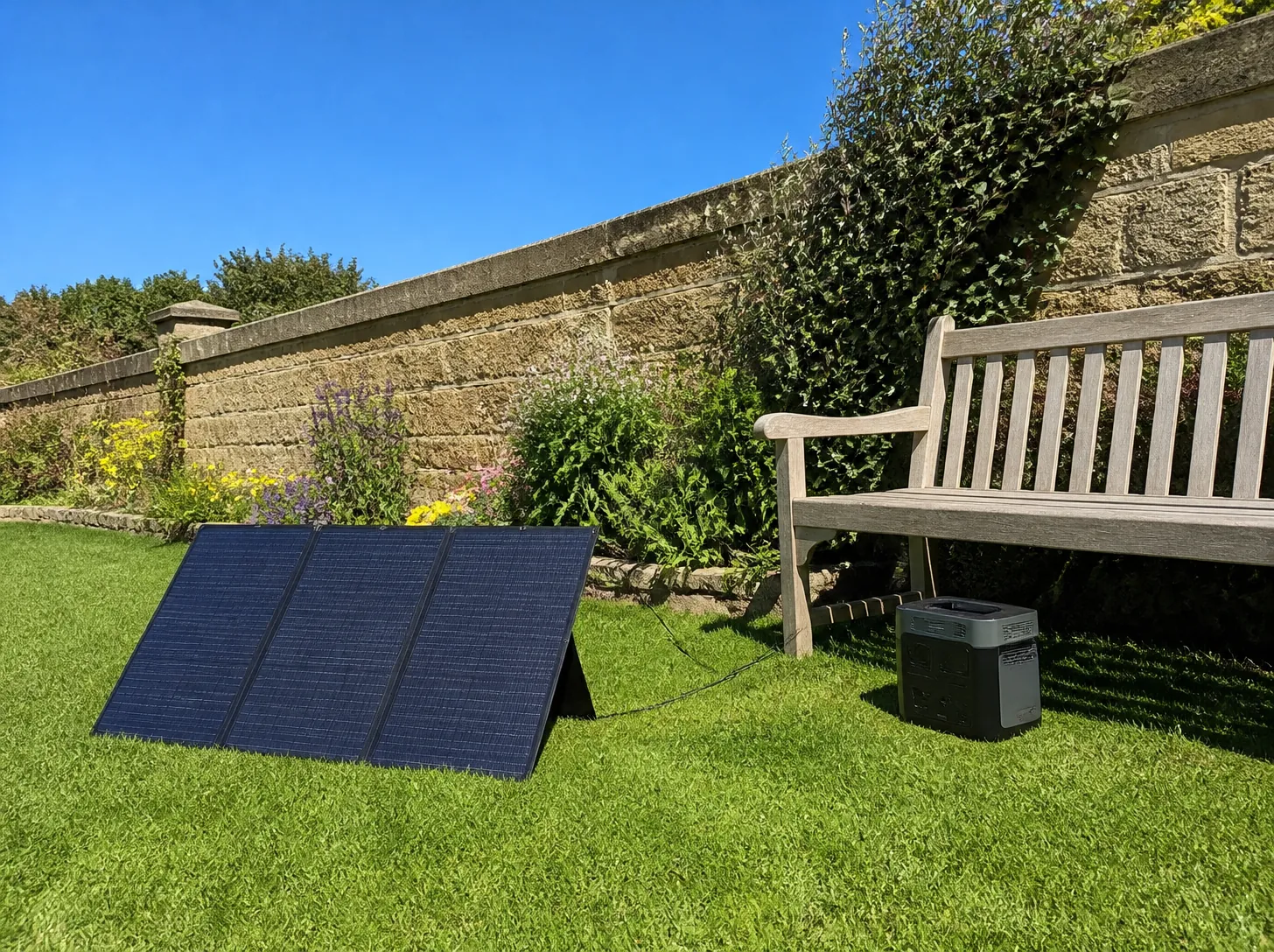
A folding panel opens out on the grass, faces the sun and charges the power station through its own lead. The station sits in the shade beside it.
On a bright summer day, a 200W panel puts roughly 130W into a station: about eight sunny hours to fill a 1kWh unit from empty. Panels will come alongside the power stations when we list them.
This setup stays off-grid. It never connects to your house wiring or to a plug-in solar kit.
Matrix 02
Standalone batteries that stay indoors and charge from a wall socket. Here's what each usable size covers.
Tap a heading to sort. Swipe the table sideways on a phone.
| Usable capacity | ||||
|---|---|---|---|---|
| 2kWh class | 1,700 | 42 | 19 | 170 |
| 3kWh class | 2,550 | 63 | 29 | 255 |
| 5kWh class | 4,250 | 106 | 49 | 425 |
Evening set: TV, two lamps and the router, about 86W. The 2kWh battery is the first size we plan to list.
For plug-in kit owners
Already have a plug-in solar kit? These sit around it and leave it exactly as you registered it.
Ballast
Coming soon
The weight that holds a ground-mount frame in place, sold in the numbers the maker sets for your wind.
Cable protection
Coming soon
Keeps the kit's own lead safe where it crosses a path or runs along a wall. No extensions.
North East winters
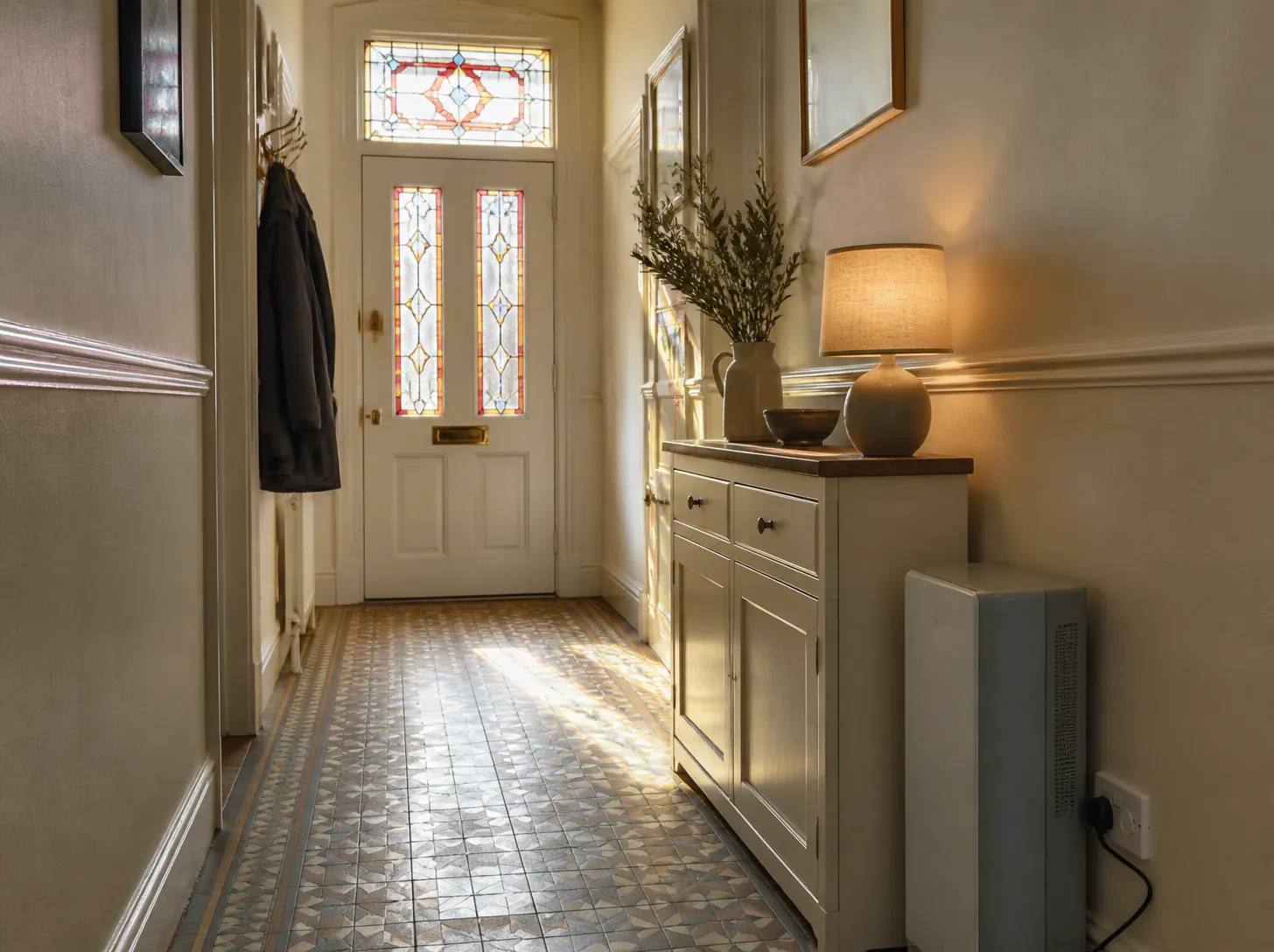
Storm Arwen in November 2021 left some homes across the North East without power for days. A charged battery keeps the essentials going: lights, Wi-Fi, phones and the fridge-freezer.
Report a power cut on 105. It's free, and it puts you through to your network operator, which is Northern Powergrid across the North East.
We're choosing the models and checking every figure before anything goes on sale. Tell us what you're after and we'll email you when you can order.
No. None of our batteries or power stations connect to a plug-in solar kit, and a plug-in kit must never be used with a battery. Power stations charge from a wall socket, a car or their own folding panel. Home backup batteries charge from a wall socket.
Kilowatt-hours (kWh) are how much energy it stores, so how long things run. Watts (W) are how much it can supply at once, so what will run at all. A 1kWh station could run a 100W load for about eight hours, but it may not start a 3kW kettle.
Yes. It makes no fumes, unlike a petrol generator. Keep it on a hard surface, away from heat and out of escape routes.
Not yet. We're choosing the models and checking each maker's figures first. Join the list and we'll email you when ordering opens.
Yes, once ordering opens. We send the collection address with your order confirmation. We'll also courier across England, Scotland and Wales.
